.svg)
.svg)

Table of contents

What's Actually in the Air Inside Your Home?
Four categories account for most residential indoor air quality problems: dust and pet dander, seasonal pollen that migrates indoors, volatile organic compounds (VOCs) off-gassed from paint, furniture, and cleaning products, and mold spores — with humidity usually deciding which one dominates in a given home.
Dust and Dander
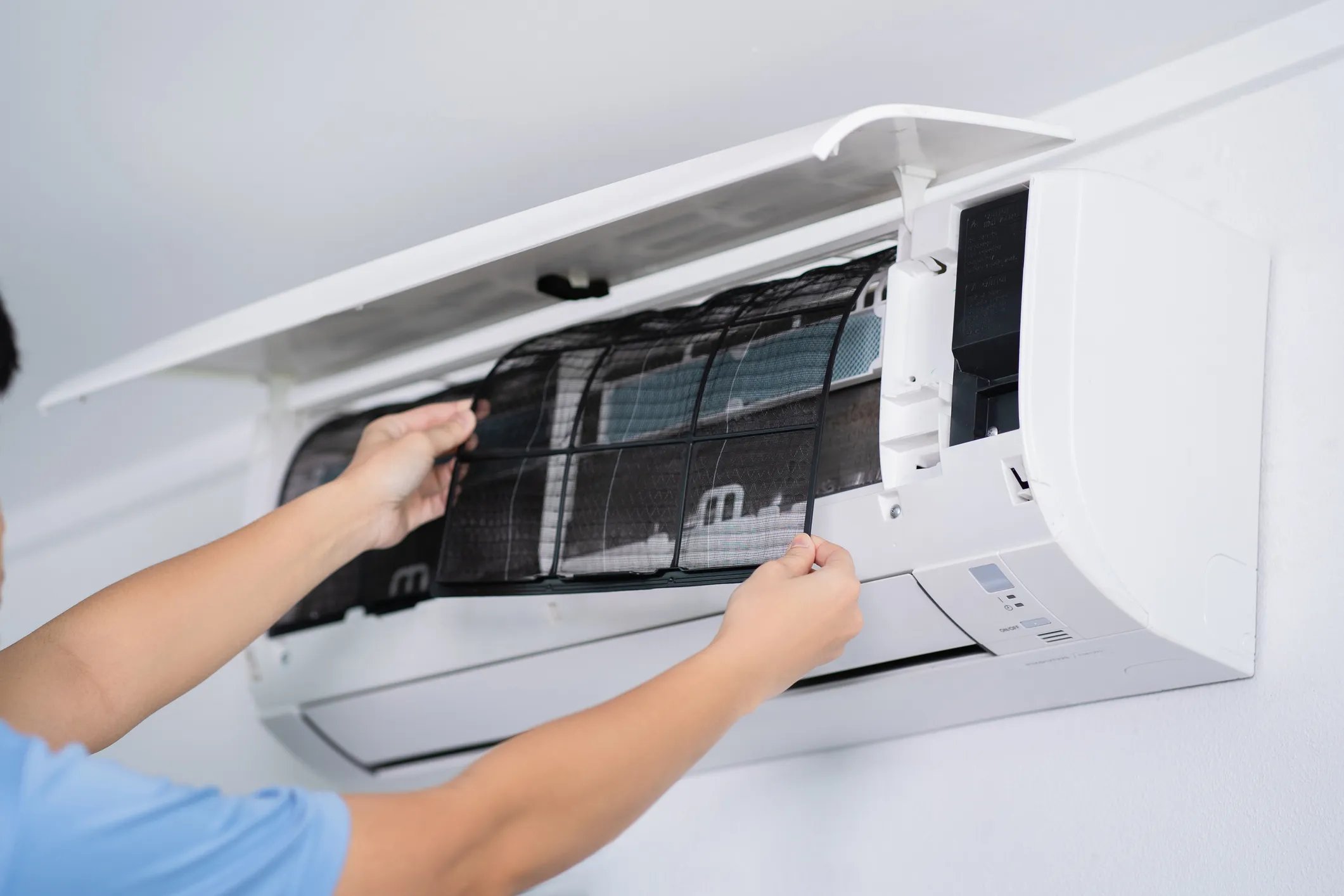
Ordinary household dust — skin cells, fabric fibers, pet dander — circulates continuously through your HVAC system's return air. A standard filter catches some of it, but a low MERV rating lets a meaningful share pass straight through and back into your living space.
Pollen
Central Alabama's spring pollen season is heavy enough that outdoor pollen counts translate directly into higher indoor levels every time a door opens or an HVAC system pulls in makeup air. Homes with allergy-sensitive occupants typically need denser filtration during March and April than the rest of the year.
VOCs
New paint, flooring, furniture, and many cleaning products release volatile organic compounds for days to weeks after installation or use — a mechanical filter doesn't remove these; only ventilation (fresh air exchange) or specific carbon-based filtration addresses VOCs.
Mold Spores
Mold needs moisture to grow, which is why humidity control is as much an indoor air quality issue as a comfort one in Alabama's climate — a system that keeps humidity in check removes one of mold's two requirements before it ever becomes airborne.
What This Means for Your System
No single component fixes all four categories — filtration handles particulates, humidity control handles mold's growing conditions, and ventilation handles VOCs. A real IAQ assessment looks at all three together rather than assuming a filter upgrade alone solves everything.
Want to know which of these is actually affecting your home? Schedule an indoor air quality assessment.
More Blogs
More Blogs
.png)

















.svg)
.svg)


.svg)
.svg)
